A smart water meter is one of the most energy-disciplined devices in electronics. Sealed to IP68 and buried in a pit or cellar, it is expected to run for ten years or more on a single non-rechargeable cell while measuring continuously and reporting by NB-IoT, LoRaWAN or wireless M-Bus. Its load profile is almost flat at microamperes, interrupted by millisecond measurement pulses and a daily radio burst that can briefly draw a hundred to a few hundred milliamperes. Understanding that profile - and the mismatch between a high-energy primary cell and a high-current radio pulse - is where a small nickel-metal hydride pulse-assist element earns its place.
Water meters in Europe and most export markets are governed by ISO 4064:2014 and OIML R49 for metrological performance, and by the Measuring Instruments Directive 2014/32/EU (MID, Annex MI-001) for legal metrology; datasheets cite the flow range ratio R (R80, R100, R160 and higher), accuracy class and a pressure rating such as PN16. The electronics are sealed to IP68 because the meter may sit in a flooded pit. None of these standards dictates the battery chemistry, but all of them assume the meter keeps measuring and logging across its declared life.
Manufacturer datasheets converge on the same power architecture: a 3.6 V primary lithium cell - commonly an ER26500 or ER34615 lithium thionyl-chloride (Li-SOCl2) C or D cell - with a stated life of ten years or more when reporting once per day.
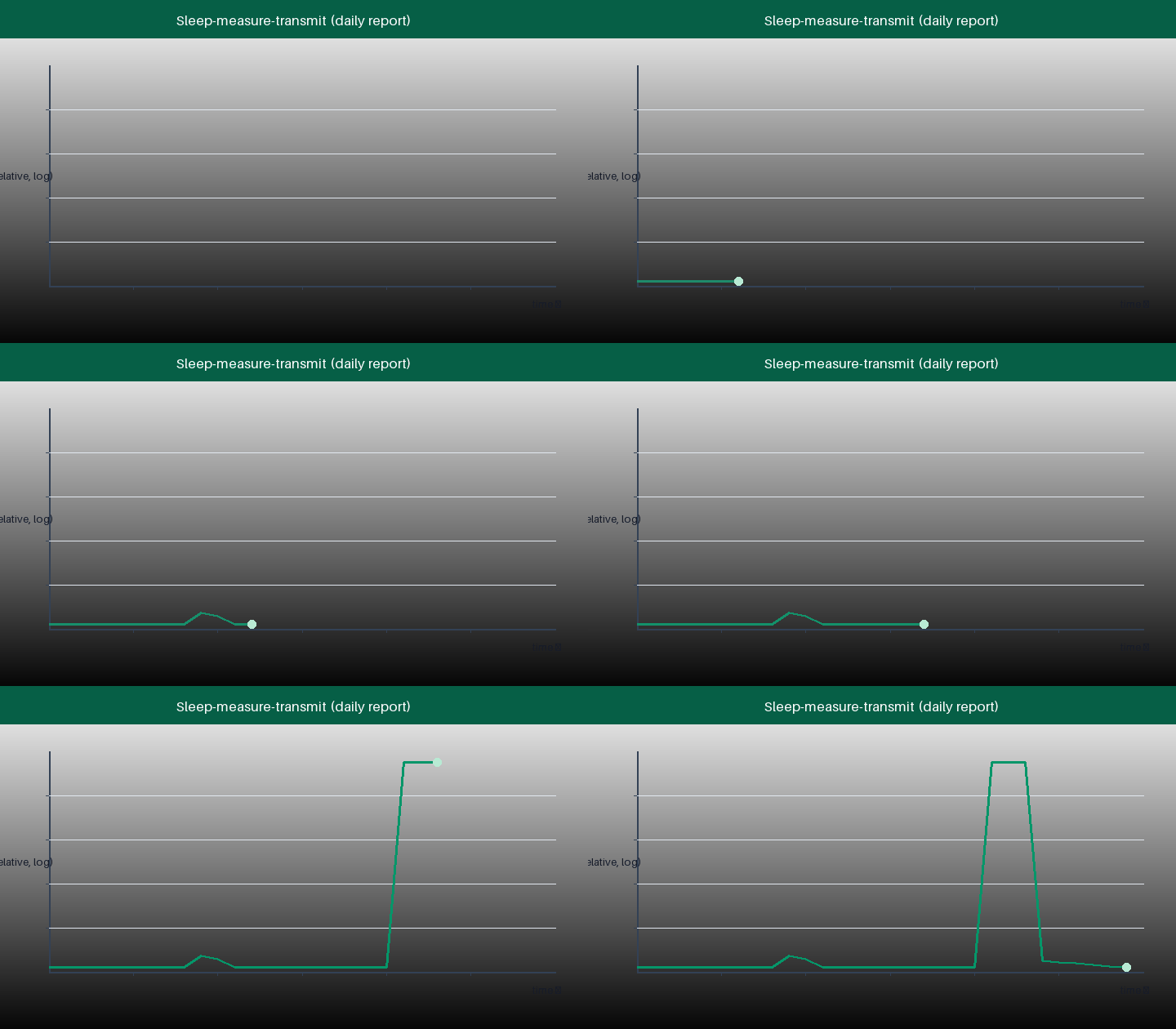
The first animated figure magnifies the meter's electrical life. Almost all the time the MCU and radio sleep at a few tens of microamperes or less. At a measurement interval the front-end wakes for milliseconds to sense flow (a non-magnetic, ultrasonic or TMR pickup) and update the display and log. Then, on the reporting schedule - typically daily for NB-IoT, a few times a day for LoRaWAN - the radio powers up, registers on the network and transmits, a burst lasting seconds at a much higher current.
Datasheets quantify the gap: NB-IoT transmit current can reach roughly 250 mA, LoRa/LoRaWAN around 110-130 mA at high power, against a sleep current measured in tens of microamps. Valve-controlled meters add a motorised shut-off valve that draws a substantial pulse for the seconds it turns. The energy is dominated by sleep, but the current stress is dominated by these pulses.
Li-SOCl2 has outstanding energy density and a long shelf life, which is why it is the default energy source, but it has two pulse limitations. Its internal impedance rises with age and at low temperature, and the chemistry can passivate, so a sudden high-current transmit can pull the cell voltage down below the radio's minimum operating voltage - causing a failed registration precisely when the meter must report. Designers therefore add a pulse reservoir, traditionally a supercapacitor or a hybrid layer, that delivers the burst while the primary cell trickle-charges the reservoir between events.
This is the opening for nickel-metal hydride: a small NiMH cell or pack can act as a rechargeable pulse reservoir that is far more energetic than a supercapacitor, supplies repeated radio and valve pulses at low impedance with a flat plateau, and is topped up from the primary cell, an energy-harvesting micro-turbine, or the meter-reading interface.
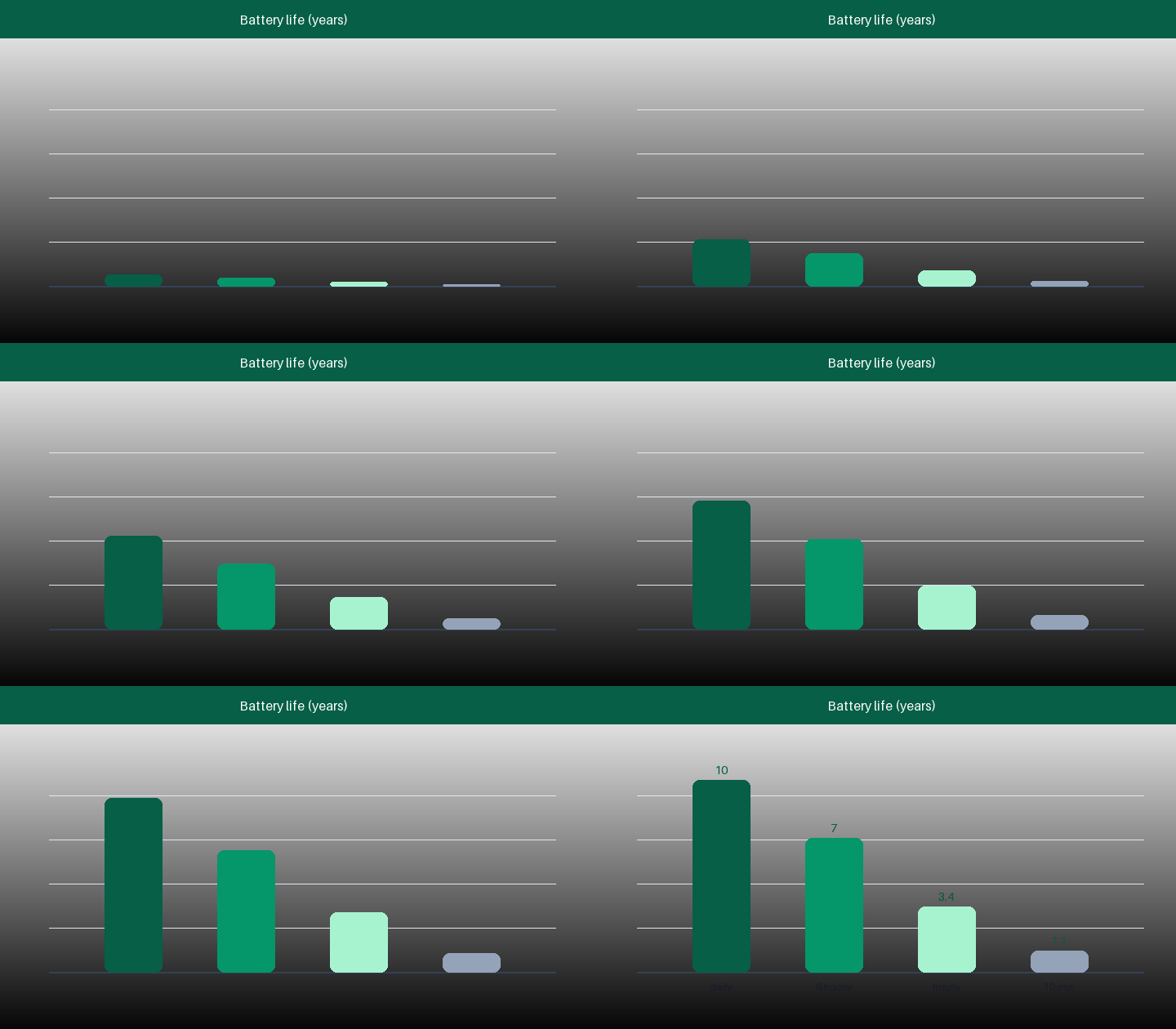
The second figure shows why network strategy is really a battery strategy: with a fixed stored energy, life shrinks sharply as the reporting interval moves from daily to hourly to near-real-time, because each transmit carries a fixed network-attachment energy on cellular networks. Vendors document exactly this - the same hardware rated beyond ten years at one report a day may drop to six years with more frequent uploads.
A NiMH pulse-assist layer changes the trade-off at the margin: by shouldering the transmit and valve peaks reliably, it lets the primary cell be optimised purely for low-background energy, and it makes more frequent reporting or repeated retries in poor-coverage pits survivable without collapsing the cell voltage.
Honesty about chemistry matters. A water meter sealed for ten years with no external energy source is, and will remain, a primary-lithium design; NiMH self-discharge means it cannot be the sole energy store for a decade. NiMH is the right answer in three real cases: as a high-energy pulse reservoir beside the primary cell; as the rechargeable store in a meter that harvests energy from the flow or is trickle-charged during meter reading; and as the battery in a valve-controlled or communicator module that is serviceable and periodically recharged.
In those roles NiMH brings an aqueous, intrinsically safe chemistry, a flat 1.2 V plateau, strong pulse current and good cold behaviour - valuable in a flooded pit that swings with the seasons.
The design brief therefore records the sleep current, the measurement wake energy, the radio technology with its transmit current and attachment time, the reporting interval and retry behaviour, the valve pulse if fitted, the design life and the pit temperature range. Paper B turns those into a hybrid energy and pulse calculation and a chemistry choice; Paper C maps the result onto ISO 4064, MID and the cell-level evidence.
Weijiang Power supplies sealed nickel-metal hydride cells and pulse-assist modules for smart water meters and AMR endpoints. Share your radio technology, transmit current and interval, valve-actuation requirement, design life and ingress rating, and our engineers will design a welded NiMH pulse buffer or rechargeable backup matched to the meter's primary battery and meter-reading charger. Review formats on the products page.


