When a lift loses power, two independent safety systems must still work, and they ask almost opposite things of a battery. An automatic rescue device (ARD) must deliver a large current for a matter of seconds to move the car to the nearest floor and open the doors; the emergency intercom must then sustain a clear two-way conversation with a rescue service for as long as help takes. Paper A, the first of three on lift emergency power, dissects these two duties, frames them against EN 81-20 for lift construction and EN 81-28 for remote alarm, and explains why nickel-metal hydride is a natural fit for the intercom - and a credible choice for compact ARD control circuits.
Consider the sequence. The supply fails while a car is between floors. The ARD detects the loss, confirms the brake and drive are in a safe state, and uses its battery to power the drive - often through the existing traction machine or a dedicated rescue motor - creeping the car to the nearest levelling point and opening the doors so passengers can exit. That motor event is high-current and brief, typically seconds to a minute or two. Separately, and in parallel, the emergency communication system must let a trapped passenger raise an alarm with a single action and hold a two-way voice conversation with a rescue service staffed around the clock.
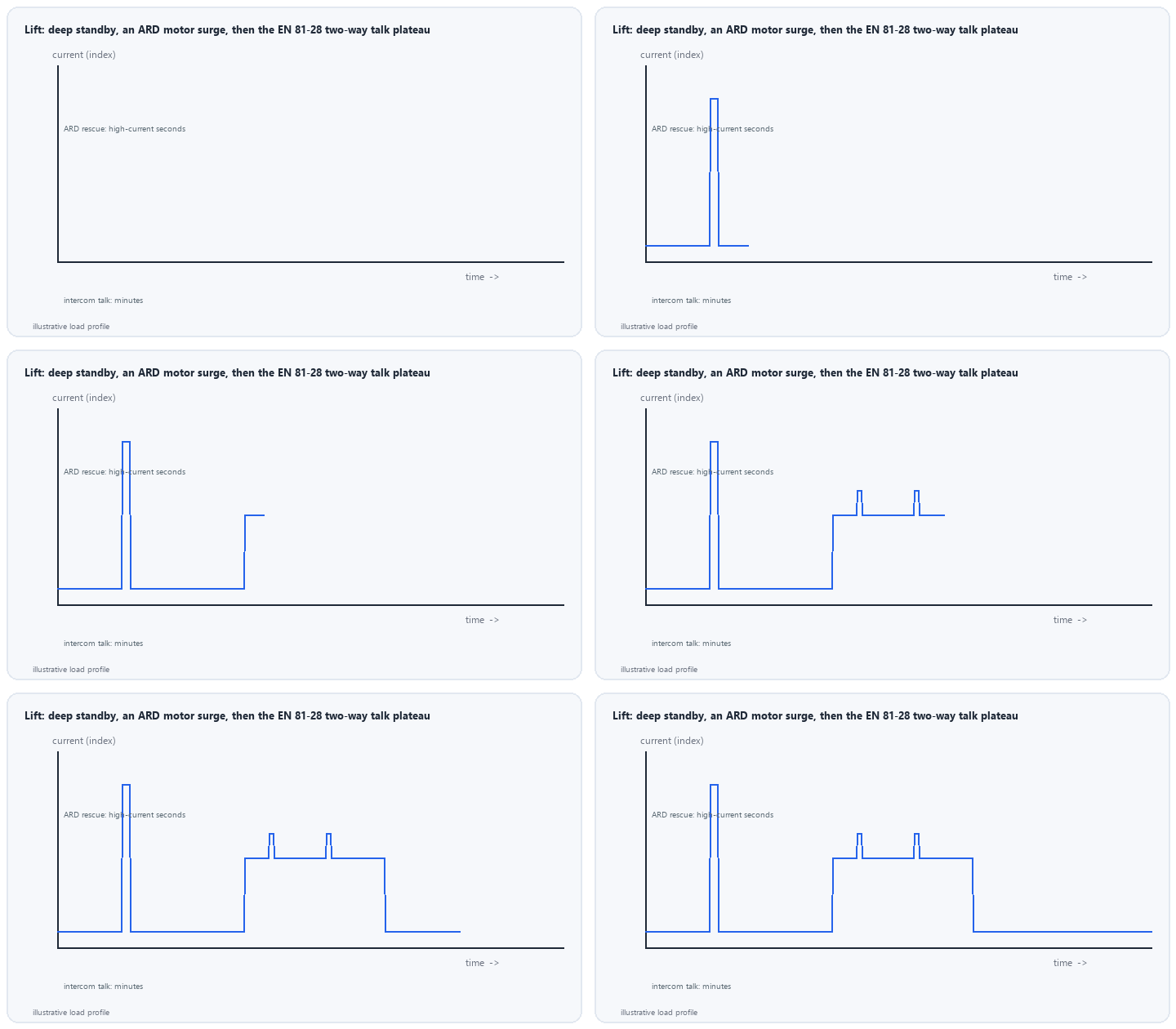
The animated trace compresses the contrast: a near-zero standby line, a tall short ARD motor surge, then a long, modest talk plateau. One battery system must be both a sprinter and a long-distance runner, which is why most designs separate the high-power ARD pack from the small, long-endurance intercom pack - and why each is sized to its own duty rather than to a misleading average.
The modern European lift rules are EN 81-20:2014 for the construction and installation of lifts (read with EN 81-50 for design rules and calculations), which replaced the older EN 81-1. Clause 5.12.3 requires an emergency alarm device and a permanent two-way communication system enabling voice contact with a rescue service, cross-referenced to EN 81-28. EN 81-28 is the dedicated remote-alarm standard: communication must be two-way (a one-way alarm bell is insufficient), initiated by a single action, connect automatically without dialling, reach a person - not a recording - at a permanently staffed rescue service, establish within roughly thirty seconds, and once established the passenger must not be able to terminate the link, although they can always re-initiate it.
These are functional requirements on the whole communication chain, and they translate directly into battery requirements: the intercom power supply must keep the microphone, speaker, amplifier and auto-dialler (GSM, IP or PSTN) alive through the outage and through repeated call attempts and conversations.
Lift emergency-communication guidance and manufacturers converge on a concrete minimum for the backup source: sufficient reserve for about one hour of standby plus at least fifteen minutes of actual talk time after mains failure, and responsible manufacturers - AVIRE among them - recommend doubling the talk-time margin because real rescues, false starts and reassurance calls consume more than a single short conversation. The connection-within-thirty-seconds requirement also assumes repeated dialling attempts, each drawing a transmission burst.
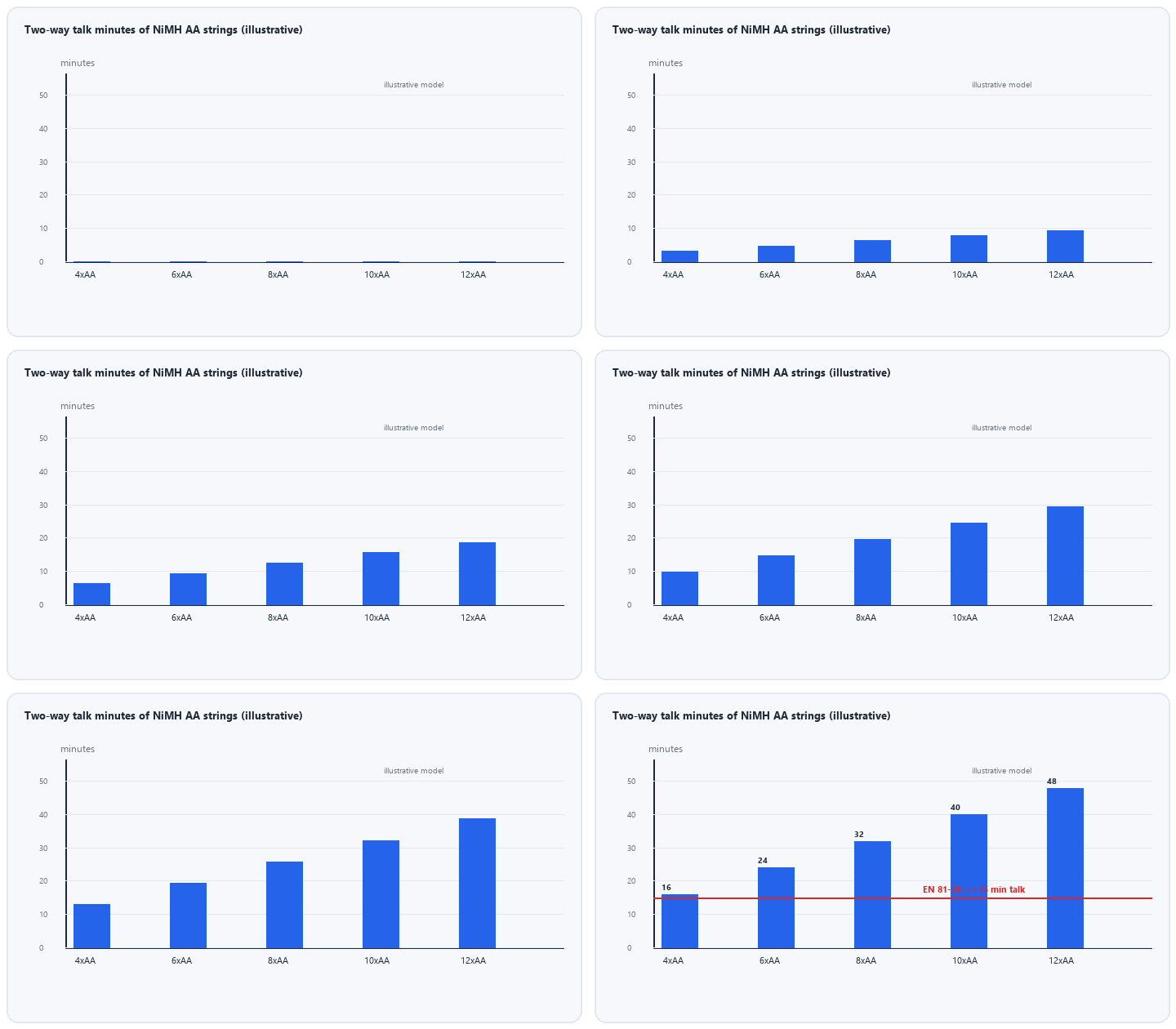
The animated chart converts NiMH AA strings of increasing size into available talk minutes. It is an illustrative model, but it shows why the real-world design choice lands where it does: a leading manufacturer's EN 81-28-compliant lift emergency unit specifies four AA NiMH cells at 1.2 V with a minimum 2000 mAh each - a deliberately generous pack that delivers the one-hour standby and clears the fifteen-minute talk floor with wide margin for cold machine-room temperatures and years of fade.
The ARD's electrical character is entirely different. Moving a loaded car, even slowly, requires real mechanical power, so the ARD battery must supply a high current at adequate voltage to the drive while the brake is held open; the event ends once the car is levelled and the doors opened. The design priorities are therefore high-rate delivery, a voltage that does not sag under the motor's inrush, and enough energy for at least one complete rescue - with margin for a second attempt if the first levelling is aborted. The pack also has to survive years of standing ready, because an ARD is called upon perhaps never, or once.
Large ARD installations frequently use lead-acid for sheer energy and cost; but for compact, low-to-mid duty ARD control circuits and for the intercom specifically, NiMH offers a high-rate, low-impedance cell that delivers the motor-control surge or the talk current on a flat plateau, tolerates cold machine rooms and rooftop panels better than lead-acid's sluggish low-temperature response, and avoids cadmium and the memory behaviour of legacy NiCd.
Many markets, notably China under its lift safety rules (TSG T7001 and the GB/T 7588 series that parallel EN 81-20), require a five-party intercom linking the car, the car top, the pit, the machine room and a 24-hour monitoring or duty room. Every station must be able to communicate during an entrapment, and the backup source must power the whole network - not only the car station - after mains loss. This multiplies the standby load: several amplifiers and line interfaces draw standing current even when idle, and a conference-style rescue call draws talk current from multiple stations at once.
Sizing the intercom battery therefore requires enumerating every station in the network, its standby current and the worst-case multi-party talk current - the same itemised-load discipline used for alarm and access backups, applied to a voice network. The one-hour-plus-fifteen-minute rule is met on the summed load, not the single car handset.
Lift environments are unkind to batteries: machine rooms and control cabinets swing hot and cold, shaft-top and pit stations see humidity and vibration, and the device may stand untouched for years between genuine events. NiMH answers with a wide operating range, a flat discharge plateau that keeps audio amplifiers and auto-diallers in their working voltage window, low self-discharge relative to older nickel chemistries in modern low-self-discharge grades, intrinsic aqueous safety and a simple transport classification. The pack must still use welded, vibration-robust construction and a temperature-aware maintenance charge, but the underlying duty - long readiness, modest talk current, occasional surge - sits squarely in NiMH's favour.
Paper B turns the two duties into a sizing and selection method; Paper C walks the EN 81-20/81-28, IEC 61951-2 and IEC 62133-1 evidence trail.
Weijiang Power manufactures NiMH cells and welded packs for lift emergency intercoms and compact ARD control circuits: AA and sub-C strings sized to the one-hour standby plus fifteen-minute (or doubled) talk duty, low-impedance high-rate cells for motor-control and transmission surges, vibration-robust construction for machine-room and shaft stations, and IEC 61951-2, IEC 62133-1 and UN 38.3 documentation. Send your five-party station count, standby and talk currents and ARD control load and we will size the packs.


