European online marketplaces have become front-line compliance enforcers. Under Regulation (EU) 2023/1542 and the market-surveillance framework, platforms must verify producer registration and compliance documentation, and deactivate offers that fail. This paper traces the enforcement chain that began in August 2025 and shows how documented nickel-metal hydride (NiMH) supply protects sellers from delisting.
Article 2025/... market-surveillance rules and Articles 54–58 of the Battery Regulation require marketplaces to cooperate with authorities and prevent non-compliant batteries from being offered. Distance sellers without an EU establishment must appoint an authorised representative, and the platform is entitled — and in enforcement phases obliged — to demand the producer's national EPR registration number, the EU Declaration of Conformity, CE evidence and responsible-person contact before listings go live. Non-compliant offers must be suspended, and repeat offenders face account-level action. The same architecture applies to packaging EPR under the PPWR regime from 12 August 2026, widening the check to every packaged product.
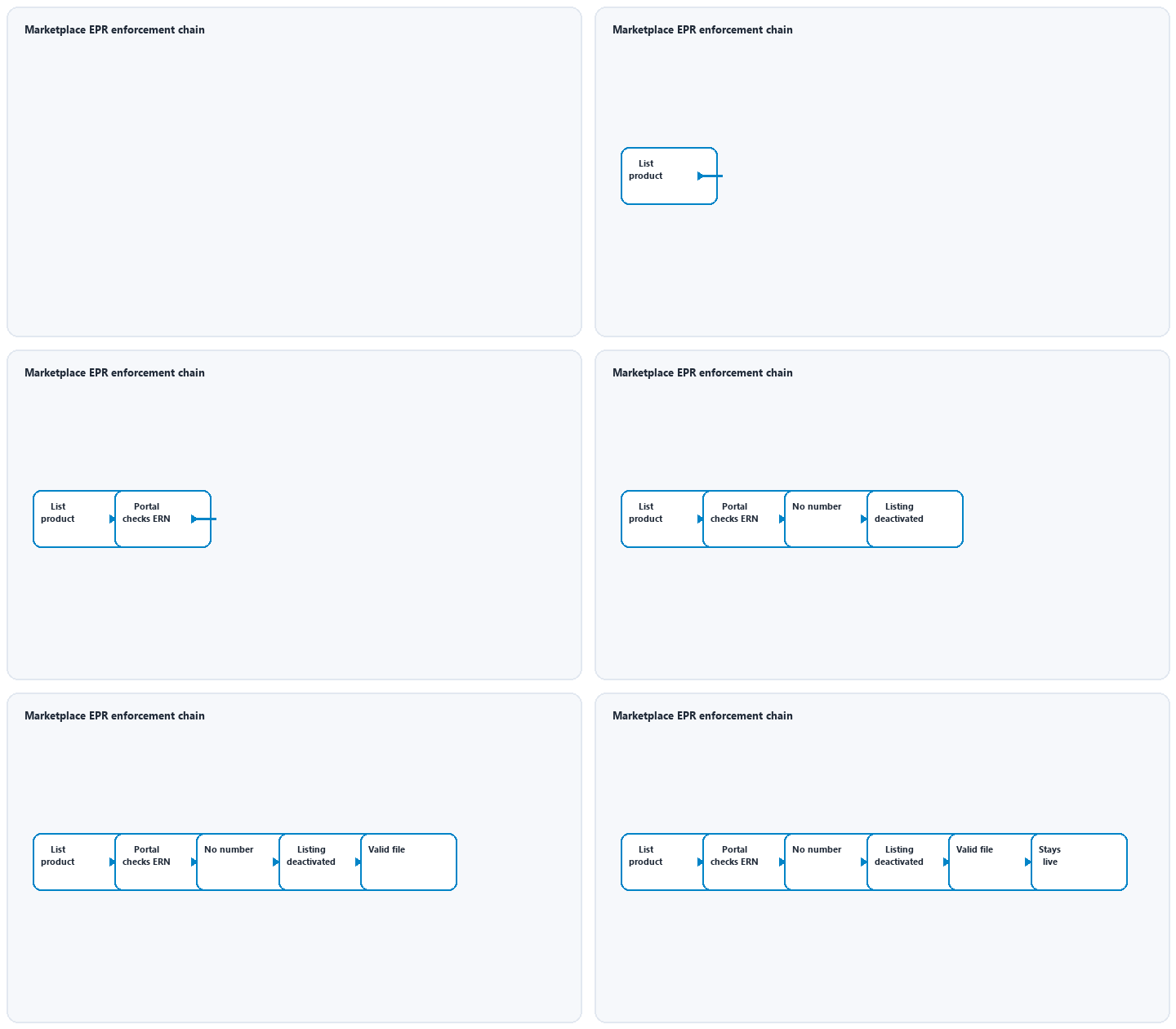
Amazon's Compliance Portal for Batteries illustrates how enforcement now works: sellers submit the battery EPR registration number for each country of sale; the number is validated against the national register (validation typically completes within five business days); from August 2025, offers without a valid number in Germany, the Netherlands, Poland and Sweden became subject to deactivation, with France, Spain, Italy, Belgium and Sweden following in staged waves; sellers must then report annual battery sales and pay eco-contributions through the relevant schemes. Germany additionally demands LUCID packaging registration alongside battery and WEEE numbers before electronics can list. Other platforms apply equivalent checks under their own compliance portals.
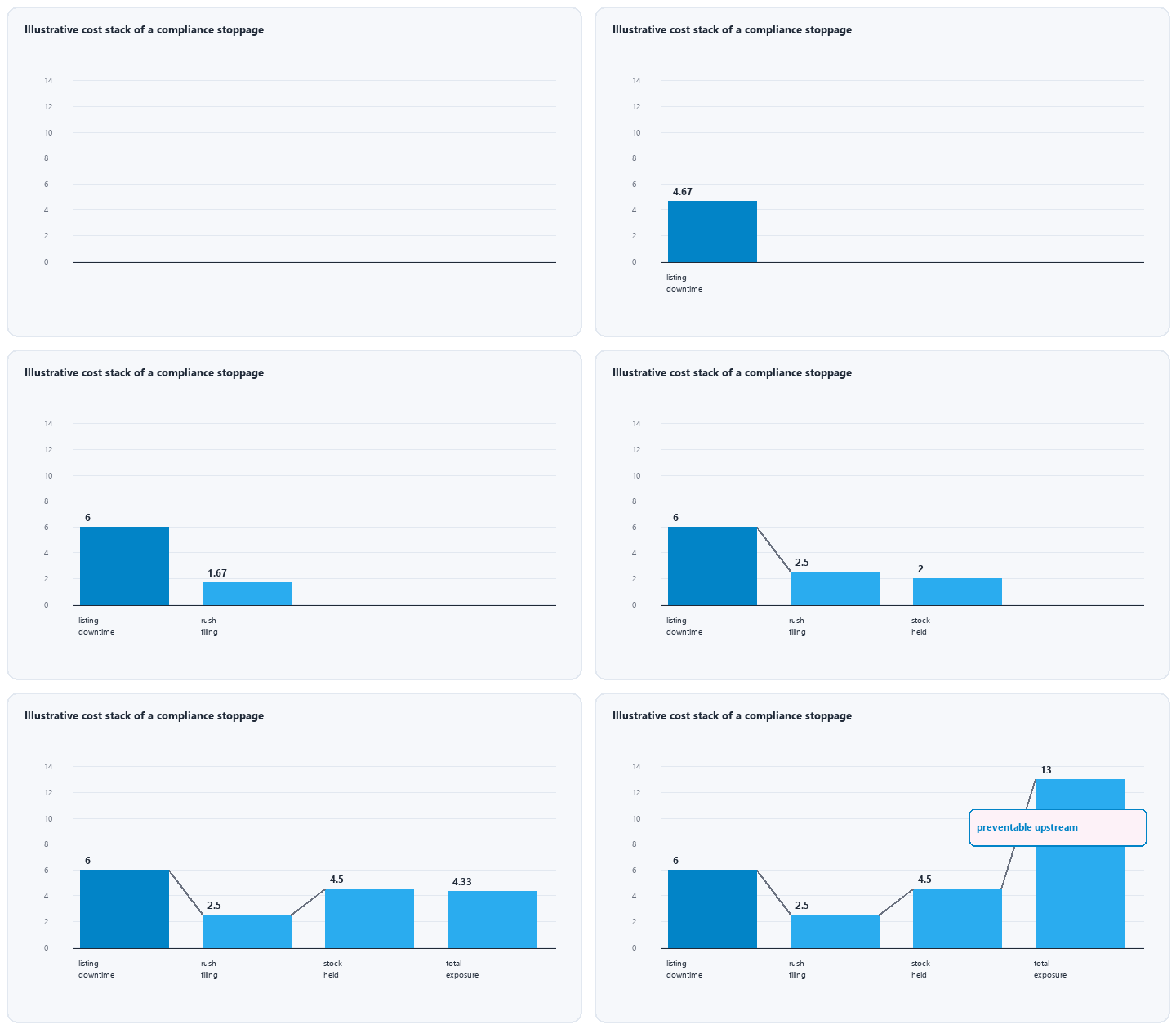
When a listing is deactivated, the seller's missing registration number is usually the visible cause — but the root cause is often upstream: the factory could not provide category and chemistry data, a Declaration of Conformity, substance reports or composition information needed to register correctly in the first place. A seller cannot honestly declare tonnage by chemistry without supplier mass data, cannot answer a compliance questionnaire without test reports, and cannot appoint an authorised representative without a lawful product file. The illustration below stacks the illustrative cost of a stoppage: dead listing days, rush filing fees and frozen stock compound quickly, while the upstream document pack that prevents all three costs very little.
A NiMH supplier aligned with the Regulation removes the failure at source: correct category classification prevents registration in the wrong producer class; chemistry and mass data feed tonnage reporting; the Annex IX DoC and IEC 62133-1/62321 reports answer portal document requests; Article 13 label artwork ensures the physical goods match the listing; PPWR-aligned packaging evidence covers the parallel packaging check. Sellers receive a "listing-ready pack" per SKU: DoC PDF, test-report index, EPR data sheet, label files and supplier contact for authority follow-up. With that pack, portal submission is a data-entry task rather than an investigation.
Recommended standing process: maintain a per-country compliance matrix (marketplace, country, registration number, scheme, renewal date); refresh the supplier document pack at every candidate-list or standard update; reconcile shipped tonnage to EPR reports quarterly; keep screenshots of successful portal validation; and agree contractually that the factory supplies corrected evidence within days of an authority query. Platforms reinstate listings quickly when valid documents appear — the sellers who recover fastest are those whose factories respond fastest.
Weijiang Power issues a listing-ready pack for every NiMH SKU sold through European marketplaces: category/chemistry/mass data for EPR registration, Annex IX DoC, IEC 62133-1 and IEC 62321 reports, Article 13 label files and PPWR-aligned packaging evidence. Send us your marketplace and target countries and we will pre-format the pack to each portal's requirements so your listings pass validation on first submission.


