Extended producer responsibility (EPR) for batteries is national, not European: a producer must register, contract take-back and report in every member state where it sells. Regulation (EU) 2023/1542 sets the framework from Articles 54–58, but the portals, numbers and fees are local. This paper maps the country-by-country system with Germany as the worked example and shows what a nickel-metal hydride (NiMH) exporter must hand its EU customers.
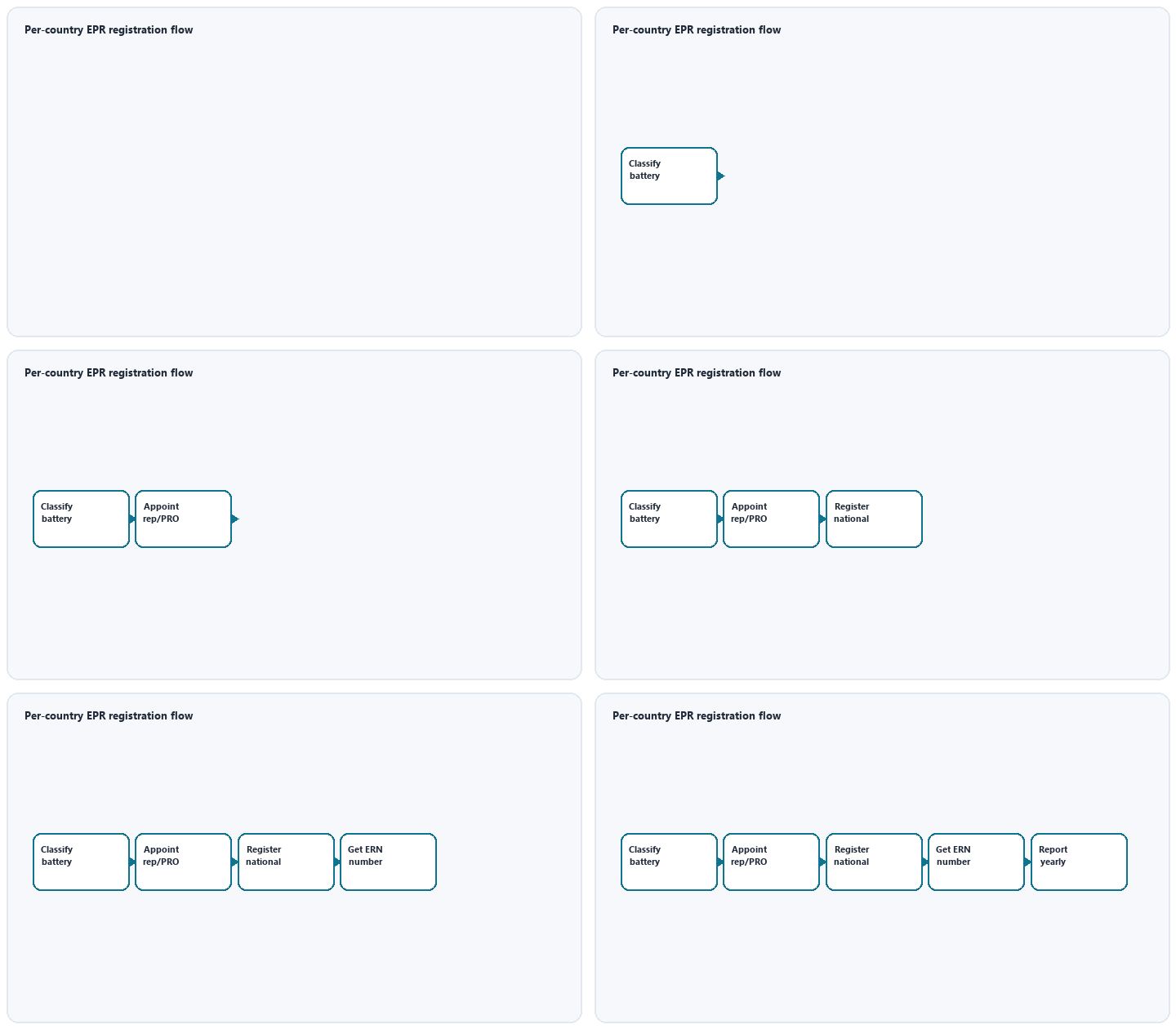
In each member state the chain is the same shape: identify who is the "producer" (brand owner, importer, or distance seller under Article 54); register in the national producer register; join one or more approved producer-responsibility organisations (PROs) that operate collection and treatment; place the registration number on invoices and marketplace compliance portals; report placed-on-market mass by battery category and chemistry at fixed intervals; pay eco-fees that finance collection, treatment and public communication; and de-register properly when leaving the market. A non-EU manufacturer without an establishment cannot itself be the registered producer in most schemes — the importer or an appointed authorised representative carries the duty.
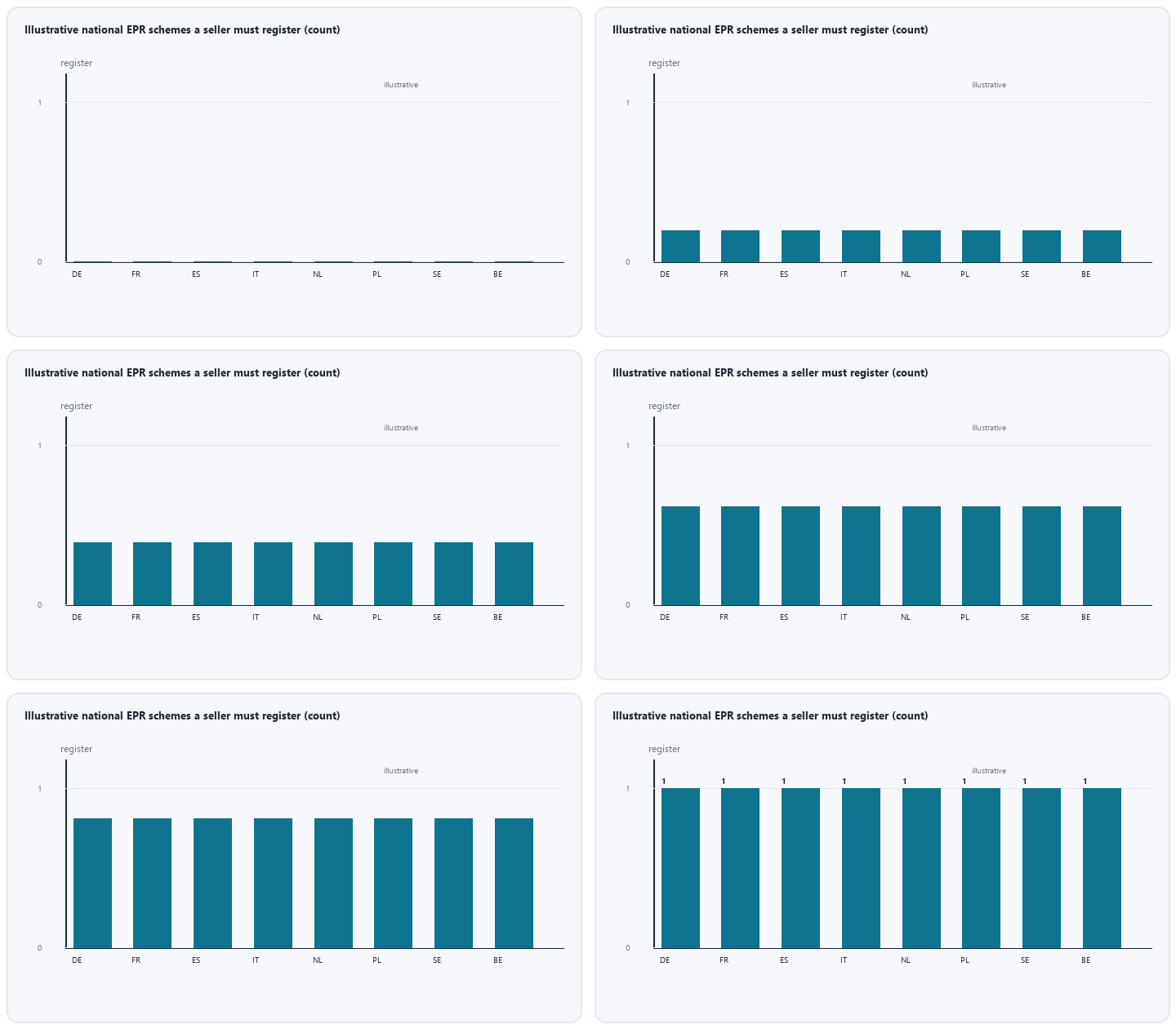
Germany transposes the Regulation through the Batterierecht-Durchführungsgesetz (BattDG, in force since 2025). Producers register with the Stiftung EAR register (delegated by the Umweltbundesamt), join an approved battery take-back system (Rücknahmesystem), report battery quantities placed on the market by category and chemistry, and carry take-back obligations for industrial batteries directly where they opt out of collective schemes. Packaging follows a parallel track through the LUCID/ZSVR register under the VerpackDG — a battery shipment typically needs both registrations. The German system is the strictest template: missing registration blocks sale, and fines plus sales bans follow enforcement. France, Spain, Italy, the Netherlands, Poland, Belgium and Sweden each replicate the structure with their own registers, schemes and reporting calendars.
Since August 2025 online marketplaces have been legally required to verify battery EPR registration before allowing listings, starting with Germany, the Netherlands, Poland and Sweden and extending across all member states. Amazon's Compliance Portal for Batteries validates the submitted number within days and deactivates offers that lack a valid registration; the same logic applies to other platforms. For a non-EU NiMH factory this means the customer's ability to sell depends on data the factory supplies — category, chemistry, mass and documentation — and on the factory's own goods being correctly described so the registration covers them.
A reusable EPR support pack contains: battery category (portable/industrial/etc.) and chemistry (NiMH) declaration; unit mass, pack mass and per-SKU shipped mass; rated capacity and Wh; hazardous-substance and composition data; treatment and dismantling information per Annex XII; DoC and CE evidence supporting lawful placement; and a per-shipment tonnage statement in the format the PRO expects. Delivered as a standing document plus a monthly tonnage extract, this lets the importer register once and report without monthly factory chasing. For industrial batteries, also state whether take-back is handled by the producer directly or a scheme — Article 56 gives industrial batteries a differentiated route that B2B contracts should reference.
Audits repeatedly find: one national number reused as if EU-wide (invalid — registration is per country); chemistry misclassification that misprices eco-fees; missing authorised representative for distance sales; packaging EPR overlooked alongside battery EPR; and tonnage reports that do not reconcile to customs records. The fix is a compliance matrix per SKU listing destination countries, registration numbers, scheme names, reporting frequency and the factory data each depends on — reviewed at every new market entry.
Weijiang Power equips EU importers with a standing NiMH EPR data pack: category and chemistry declarations, SKU and shipment masses, composition and dismantling data and monthly tonnage extracts in PRO-compatible formats. Tell us your destination markets and sales model and we will align the data sheet to each national register so your customers' registrations stay valid and their listings stay live.


