If overcharge is the engine of NiMH ageing, the hydride-alloy negative surface is where most of that engine's wear accumulates. The same surface film that catalyses hydrogen absorption and oxygen recombination can thicken into a resistive corrosion layer under sustained oxidising and thermal stress; alloy particles crack as they breathe hydrogen; and constituent elements leach into the electrolyte. This paper descends to the microscopic scale to explain hydride-electrode degradation, shows how charge current, overcharge and temperature govern its rate, examines material innovations - including rare-earth fluoride surface coatings that demonstrably resist abusive overcharge - and translates the materials science into charge-protocol guidance.
A hydride-alloy particle must present a surface that is simultaneously protective and catalytic: a thin oxide-rich film prevents bulk corrosion while sub-surface catalytic clusters split water into absorbable hydrogen and recombine oxygen. As manufactured this layer is thin and conductive; its balance is what allows the oversized negative to act as both hydrogen store and oxygen sink during overcharge.
Charge history shifts that balance. Sustained overcharge keeps the surface in an oxidising environment and recombination heat raises its temperature, thickening the oxide, reducing catalytic site density and raising charge-transfer resistance - the growing mid-frequency EIS semicircle identified in Paper 17 as a primary ageing signature.
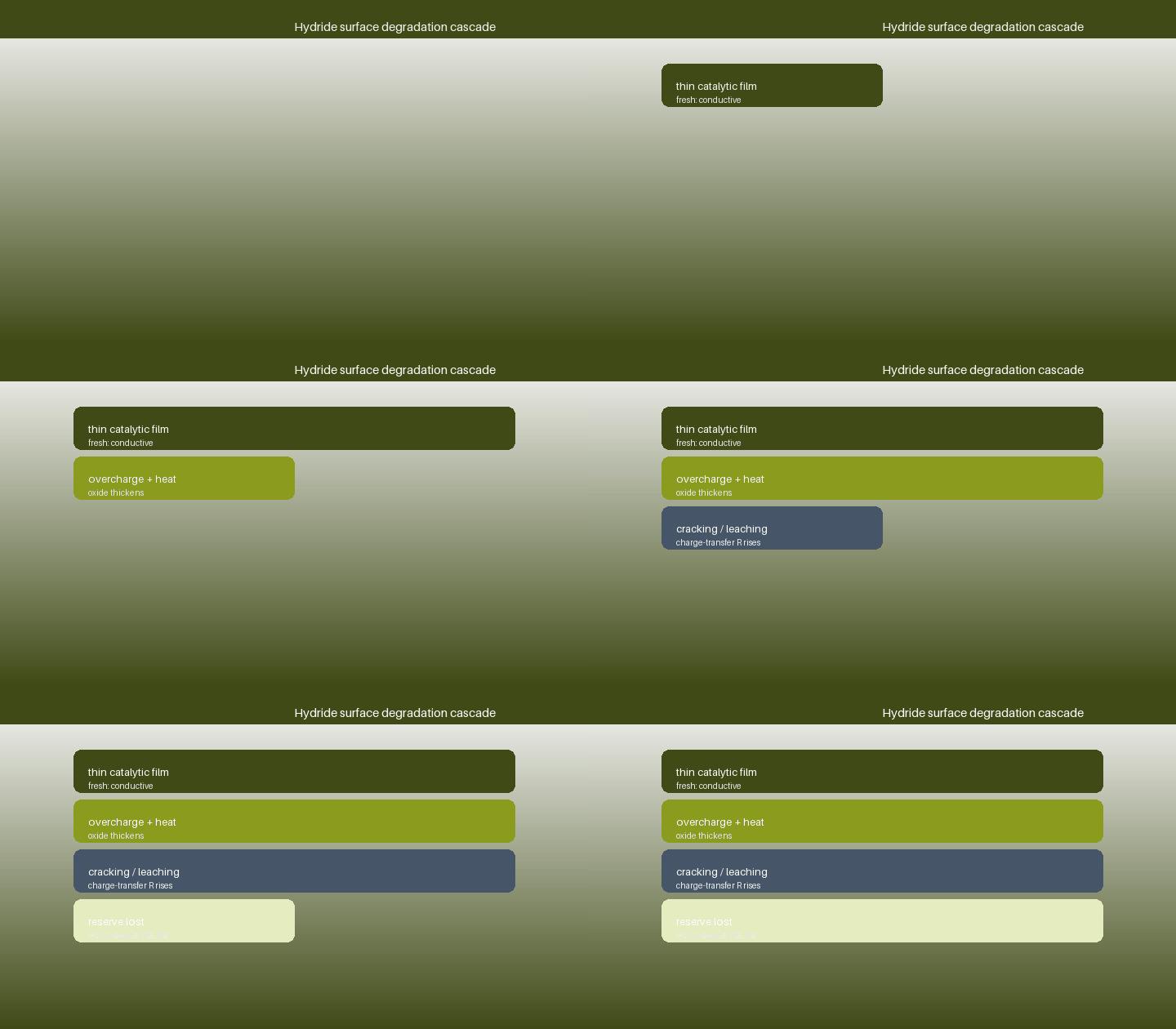
Each charge-discharge cycle expands and contracts the alloy lattice as hydrogen enters and leaves; repeated volume change nucleates cracks that fragment (pulverise) particles, exposing fresh, unprotected surface to oxidation. More surface initially aids kinetics but accelerates corrosion over cycles, and fine particles can clog the porous electrode. High currents steepen internal concentration gradients and make the hydrogen distribution - and thus local expansion - less uniform, increasing mechanical stress.
Gentler, thermally controlled charging and avoiding extreme states of charge keep lattice expansion within a narrower range, reducing crack growth; this is a second, mechanical route - alongside corrosion chemistry - by which charge protocol governs negative-electrode life.
In the alkaline electrolyte, oxidised alloy constituents can dissolve (leach) and the alloy can undergo slow disproportionation, removing material from the hydrogen-storing phases. The clearest system-level consequence is erosion of the negative's capacity reserve: designed oversized to absorb overcharge oxygen, a corroded negative eventually loses that margin, at which point hydrogen evolution, rising pressure and earlier venting appear - the familiar abrupt late-life acceleration of NiMH degradation.
Because reserve loss is cumulative and largely irreversible, the life-maximising strategy is to slow its spending: minimise overcharge duration and temperature as Papers 4 and 21 establish, keep pressure below vent thresholds, and match charge current to the grade's recombination capacity rather than to the charger's maximum capability.
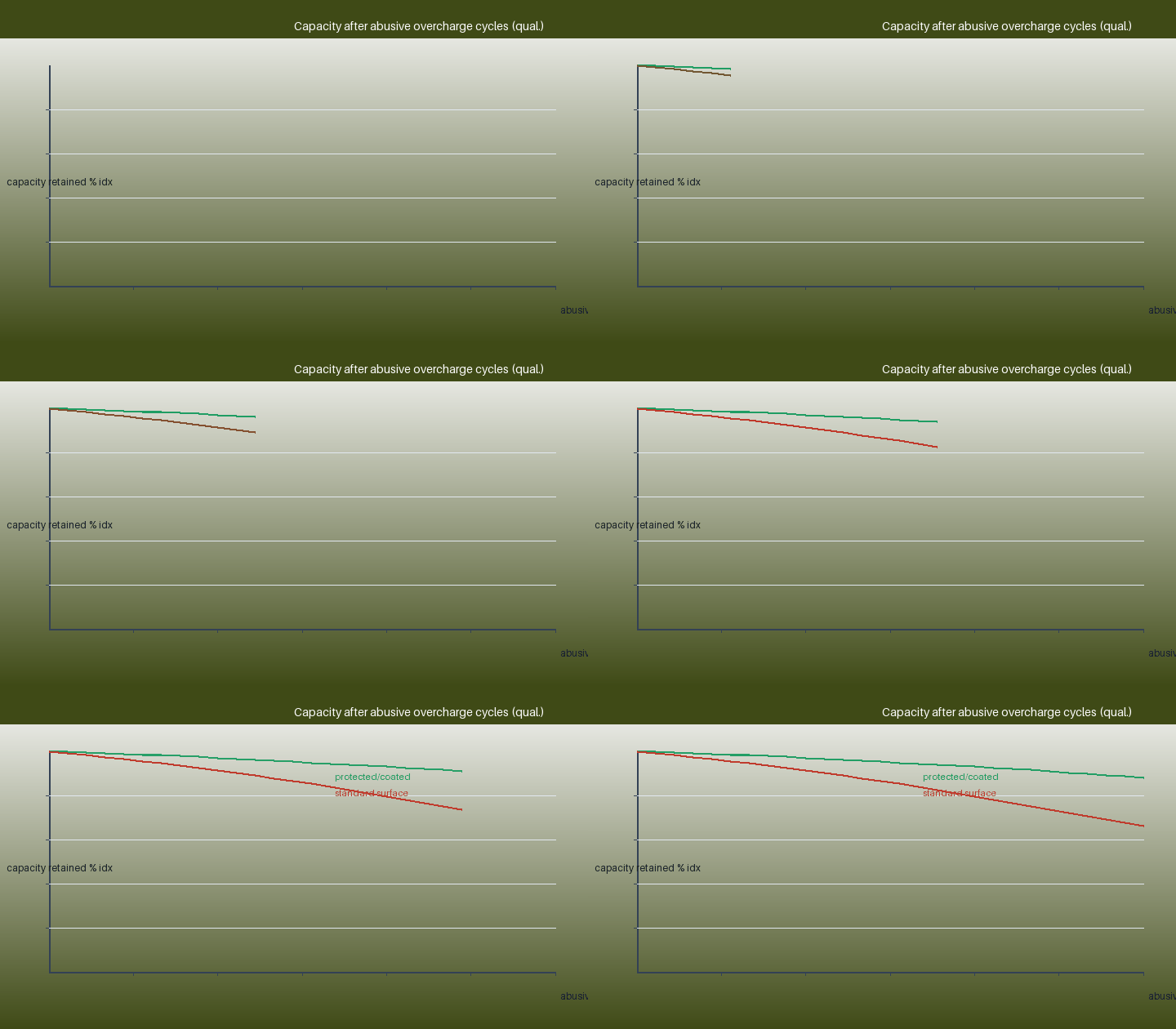
Materials research directly targets this surface. A notable example is rare-earth fluoride modification - a LaF3-coated negative reported to retain about 88 percent capacity after 40 deliberately abusive overcharge cycles and to perform well at low temperature - by stabilising the surface against oxidation and preserving catalytic activity. Advanced AB2 and superlattice alloys, element substitution and controlled surface treatment pursue the same goal: a film that stays thin and catalytic under the overcharge conditions a real charger imposes.
For a charger designer this matters because cell grade sets the abuse budget: a grade engineered with a corrosion-resistant surface tolerates a faster, hotter profile than a standard grade, and the charge specification should be matched to that measured budget rather than applied uniformly.
The convergent guidance is to keep the negative cool, avoid prolonged oxidising overcharge, and avoid high-current charging at the extremes of temperature where surface kinetics are stressed most. In practice: multi-criterion termination that stops at the inflection/-delta-V, reduced-current top-off, pulse maintenance instead of continuous trickle (Paper 9), and current derating when logged charge-transfer resistance indicates the surface has aged.
The first figure contrasts a fresh and aged surface film and its EIS consequence; the second compares capacity retention under abusive overcharge for coated/protected and standard surfaces qualitatively, illustrating why material grade and protocol must be co-selected.
A defensible specification states the maximum overcharge duration and temperature for the chosen grade, derates current as surface resistance grows, and pairs fast-charge programs with grades whose surface treatment is rated for them. Weijiang can advise on grade selection against a target overcharge exposure and provide charge-transfer-resistance growth curves that let a charger detect negative-electrode ageing before reserve loss becomes critical. The next paper steps back to quantify how the full protocol space - depth of charge, rate and temperature - maps onto cycle life.
Weijiang Power designs and manufactures nickel-metal hydride cells, matched packs and charging-ready configurations for consumer, industrial, medical and mobility customers, and supports partners with charge-protocol guidance, IEC 61951-2 performance files, IEC 62133-1 safety evidence and charger co-validation. Share your cell format, charge rate, thermal envelope and cycle target and our engineers will specify a cell-and-charge combination that protects both runtime and service life. Review the range on the products page.


