A rugged handheld computer or barcode scanner is the point where logistics, manufacturing and field service meet the digital system: a warehouse worker scans hundreds of cartons an hour, a cold-chain inspector moves between a -25 C freezer and a +25 C dock, a maintenance technician carries a PDA through a full shift of drops, dust and rain. These devices are specified to punishing mechanical standards - leading mobile computers survive repeated three-metre drops to concrete across temperature and thousands of one-metre tumbles, and sealed units reach IP68 - while their batteries must power a colour touchscreen, a 1D/2D scan engine, wireless radios and sometimes a printer for an entire shift. This first paper dissects that load profile, grounds it in published rugged-device specifications, and then draws an intentionally honest map of battery chemistry: the main PDA pack is overwhelmingly a 3.7/3.8 V lithium-ion or lithium-polymer cell, and nickel-metal hydride earns its place in the surrounding ecosystem - scanner-grip and trigger accessories, backup and bridge power, charging-cradle buffering, cold-scenario supplements and field-swappable AA fallback - rather than by pretending to replace the lithium main battery.
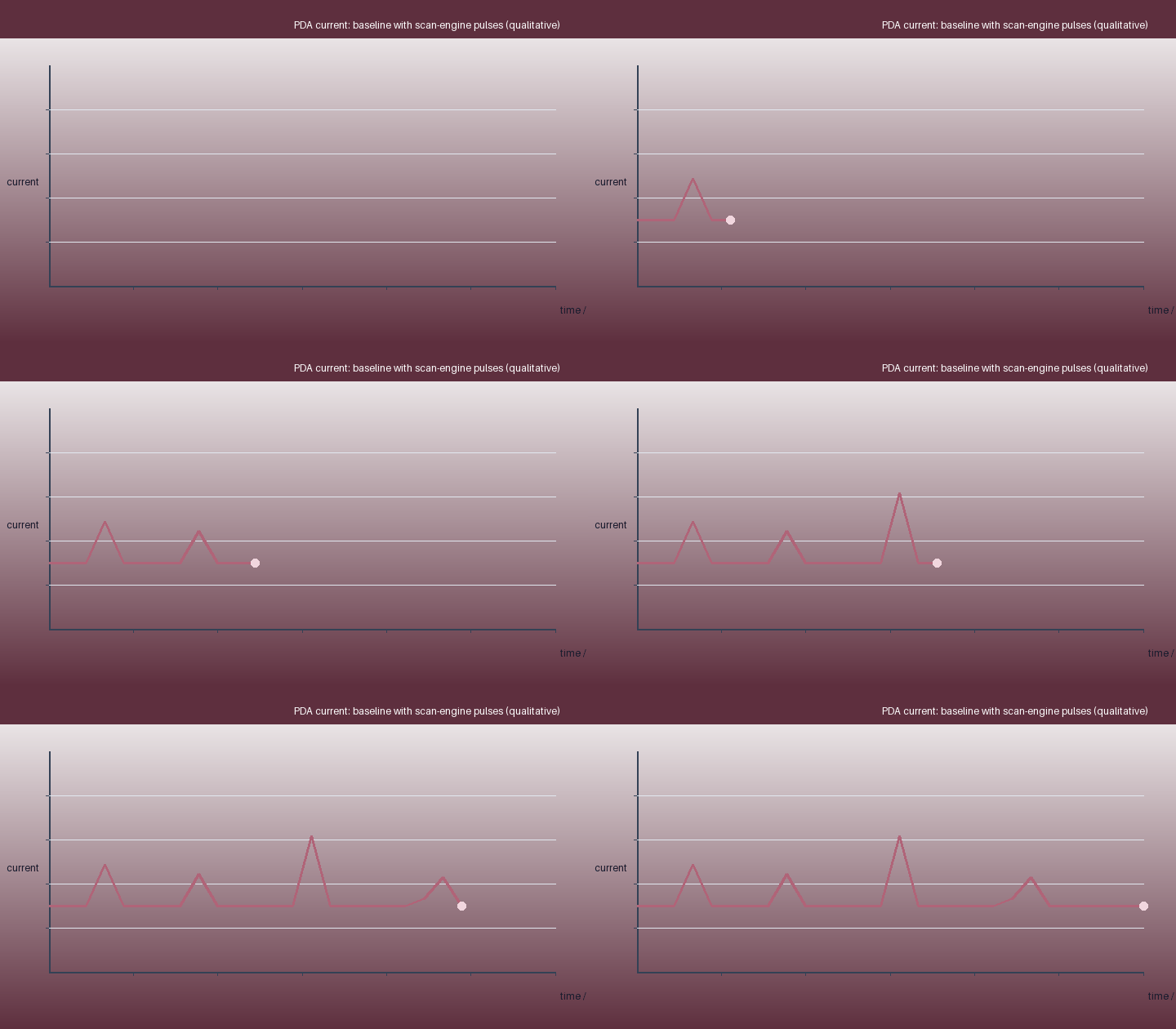
A rugged PDA's current is a sequence of pulses on a meaningful baseline. Between scans the application processor, touchscreen and wireless radio (Wi-Fi, 4G, Bluetooth) draw a continuous current that scales with screen brightness and radio signal quality; each trigger pull wakes the 1D/2D scan engine - an illuminator, aiming laser and imager sensor - for a brief, relatively high-current capture; beeps, vibration and optional printing add short peaks. The duty is bursty but relentless across an eight-hour (and in extended-battery models, twelve to twenty-four hour) shift.
Published device specifications reflect this: enterprise rugged computers carry 3.7/3.8 V lithium-ion or lithium-polymer packs from roughly 4000 to 6700 mAh, with quoted battery life spanning a single shift to multi-shift operation depending on scan rate, radio use and screen. The energy density required to run a large colour display and cellular radio all shift is the core reason lithium chemistry dominates the main pack, and any honest analysis starts from that fact.
Ruggedness is where these devices differ fundamentally from consumer phones. The Honeywell CK65 is rated to survive repeated three-metre drops to concrete across its full operating temperature range plus 3,000 one-metre tumbles, with IP65/IP68 sealing; the UROVO RT40 is IP68, survives 1.8-metre drops to flat concrete, operates from -30 to 50 C and stores from -40 to 70 C. These figures come from controlled IEC and MIL-STD-style methods and define the mechanical and thermal world the battery lives in.
Battery consequences follow directly: cells must survive repeated shock without internal damage or connection loss, operate through rapid temperature transitions (the freezer-to-dock cycle that causes internal condensation), and retain safety when sealed in a dust- and water-tight enclosure. Both lithium main packs and any nickel-based auxiliary cells must meet this mechanical reality, and the cold ratings are especially relevant to the chemistry choice, as discussed below.
Lithium-ion and lithium-polymer win the main-pack role on energy density: a modern PDA drives a power-hungry display and always-on wireless link, and only lithium packs the required watt-hours into a device that must remain light and pocketable. Its high single-cell voltage (nominally 3.7 V) suits the PDA's power architecture, and mature protection ICs manage its cells. A credible engineering article does not claim NiMH replaces this pack; the volume and weight penalty of doing so would be unacceptable for a full-featured handheld computer.
What NiMH offers instead is a set of complementary properties that matter at the edges of the system: robustness to rough and shallow charge regimes, tolerance of charge and discharge in the cold (lithium may not be charged below freezing and loses effective capacity when very cold), simplicity of protection, non-lithium transport, and the universal availability of AA cells as an emergency source. Mapping those properties to the right sub-systems is where NiMH creates real value.
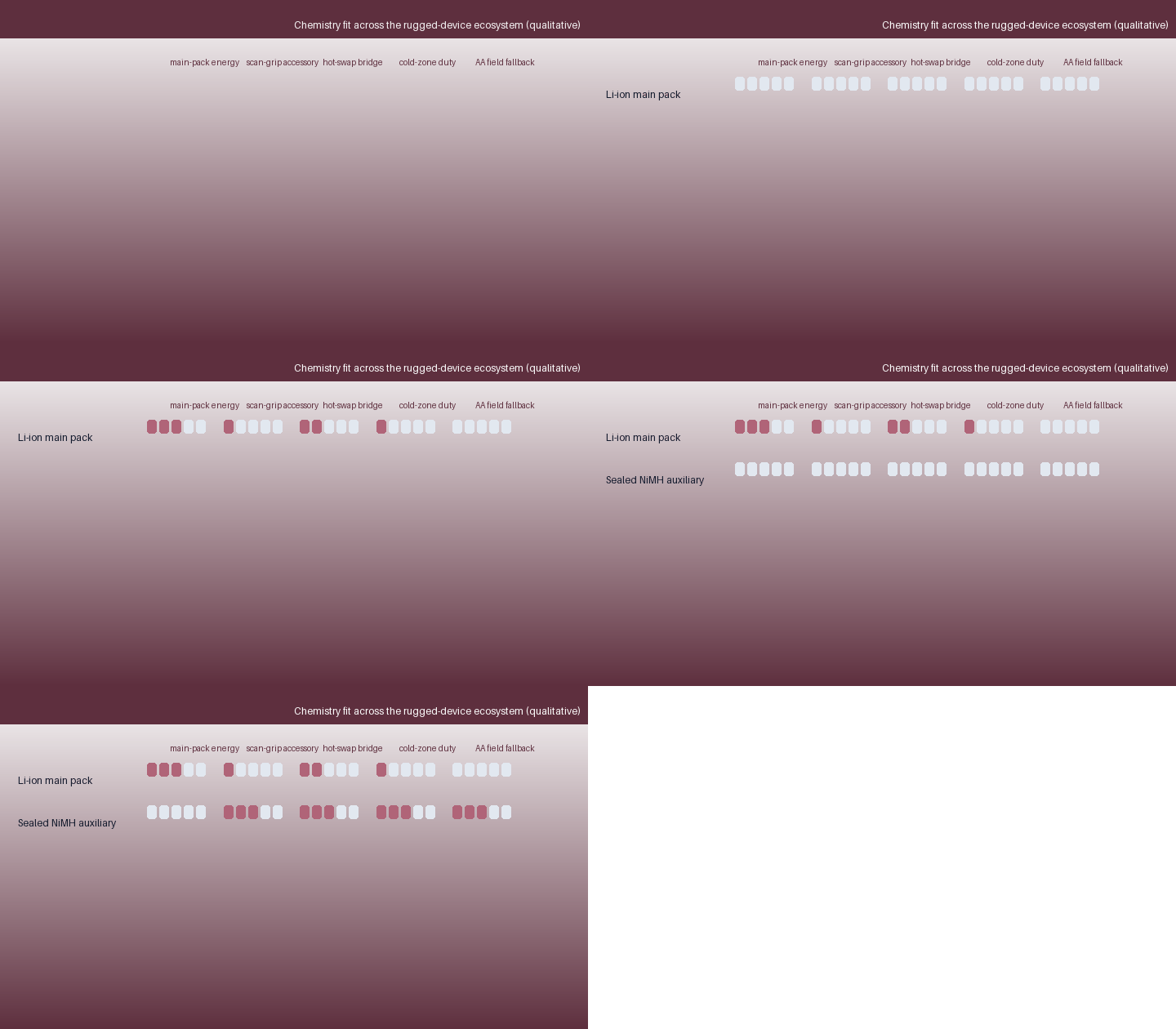
Several roles around the PDA suit NiMH well. Pistol-grip scan handles and trigger modules for tablet-based scanners can carry their own NiMH cells to power the scan engine and offload the main battery; snap-on backup/extended batteries and 'bridge' packs sustain the device during a hot-swap of the lithium main pack, keeping a session alive; charging-cradle and dock circuitry uses small nickel-based buffers for orderly backup of data and graceful power-down; and some rugged field devices deliberately accept standard AA (NiMH or primary) cells as a fallback when no lithium spare is available.
NiMH is also valuable in dedicated cold-chain accessories and in companion devices that are lower-energy than the main PDA - ring scanners, tethered imagers, Bluetooth trigger handles - where its cold tolerance and rough-use robustness outweigh lithium's density advantage. The first animated figure contrasts the PDA's scan-pulse current profile; the second maps battery chemistries across the device ecosystem to show the main-pack versus accessory split.
Freezer and outdoor winter work is the scenario where chemistry choice is most visible to users. Lithium-ion's usable capacity contracts at very low temperature and - critically - it must not be charged below 0 C because charging cold lithium plates metallic lithium and permanently damages the cell; cold-chain workflows therefore rely on hand-warmer pockets, heated docks and careful rotation. NiMH discharges capably at low temperature and can accept some charge below freezing, making it a pragmatic choice for auxiliary power that actually lives in the cold zone.
Devices such as the RT40 that operate to -30 C achieve their rating through a combination of component selection, thermal design and a characterised battery; an NiMH auxiliary or fallback source in that environment is more forgiving of the repeated cold soak and warm-up cycles than a lithium accessory would be, even though the high-energy main pack remains lithium. Designing the accessory power around NiMH for freezer duty is a defensible, evidence-based choice rather than a compromise.
The load-profile analysis yields a two-layer specification. The main pack is a high-energy lithium pack sized to the shift, with hot-swap or spare strategy; the auxiliary layer - scan grip, bridge/backup, cradle buffer, cold accessory or AA fallback - is where sealed NiMH is specified for robustness, cold tolerance, simple charging and universal form factors, with low internal resistance to deliver the scan-engine pulse and low self-discharge so a docked accessory is always ready.
The next paper turns this into concrete design guidance: sizing and integrating NiMH auxiliary cells, hot-swap and bridge architectures, cold-chain accessory design and charger strategy, and the fleet-management logic of mixed lithium/NiMH handhelds. The third paper maps the IEC 60529 and drop/tumble qualification, the battery standards IEC 61951-2 and IEC 62133-2 and the differing UN 38.3 (NiMH) versus UN 3480 (lithium) transport rules that a complete rugged-device battery programme must satisfy.
Weijiang Power designs and manufactures sealed nickel-metal hydride cells and matched industrial packs for remote, off-grid and safety-related equipment, and supports OEM partners with IEC 61951-2 performance files, IEC 62133-2 safety evidence, pulse-load characterisation, wide-temperature testing and charger/pack co-validation. Tell us your duty cycle, peak current, temperature envelope, autonomy target and the standards your product must meet, and our engineers will specify a cell-and-pack combination that protects runtime, reliability and service life. Review the range on the products page.


