
Choosing a battery chemistry in 2026 is a regulatory decision as much as an engineering one. This paper scores nickel-cadmium (NiCd), nickel-metal hydride (NiMH) and lithium-ion against the actual requirements of Regulation (EU) 2023/1542, REACH, transport rules and end-of-life obligations — showing why cadmium-free NiMH is the lowest-regret default for many European professional and industrial applications.
NiCd fails at the foundation: cadmium is its active negative material at roughly 15–20 % of cell mass against a 20 ppm portable limit in Annex I, and the old use exemptions have narrowed sharply; only legacy emergency/medical niches survive under strict conditions. NiMH contains no cadmium, mercury or added lead by design and tests at or near detection limits. Lithium-ion cells pass Annex I but carry heavier REACH material complexity — fluorinated binders and electrolyte additives, cobalt and PFAS-related screening — plus ELV overlaps in vehicle use. On substance headroom, NiMH is the cleanest of the three.
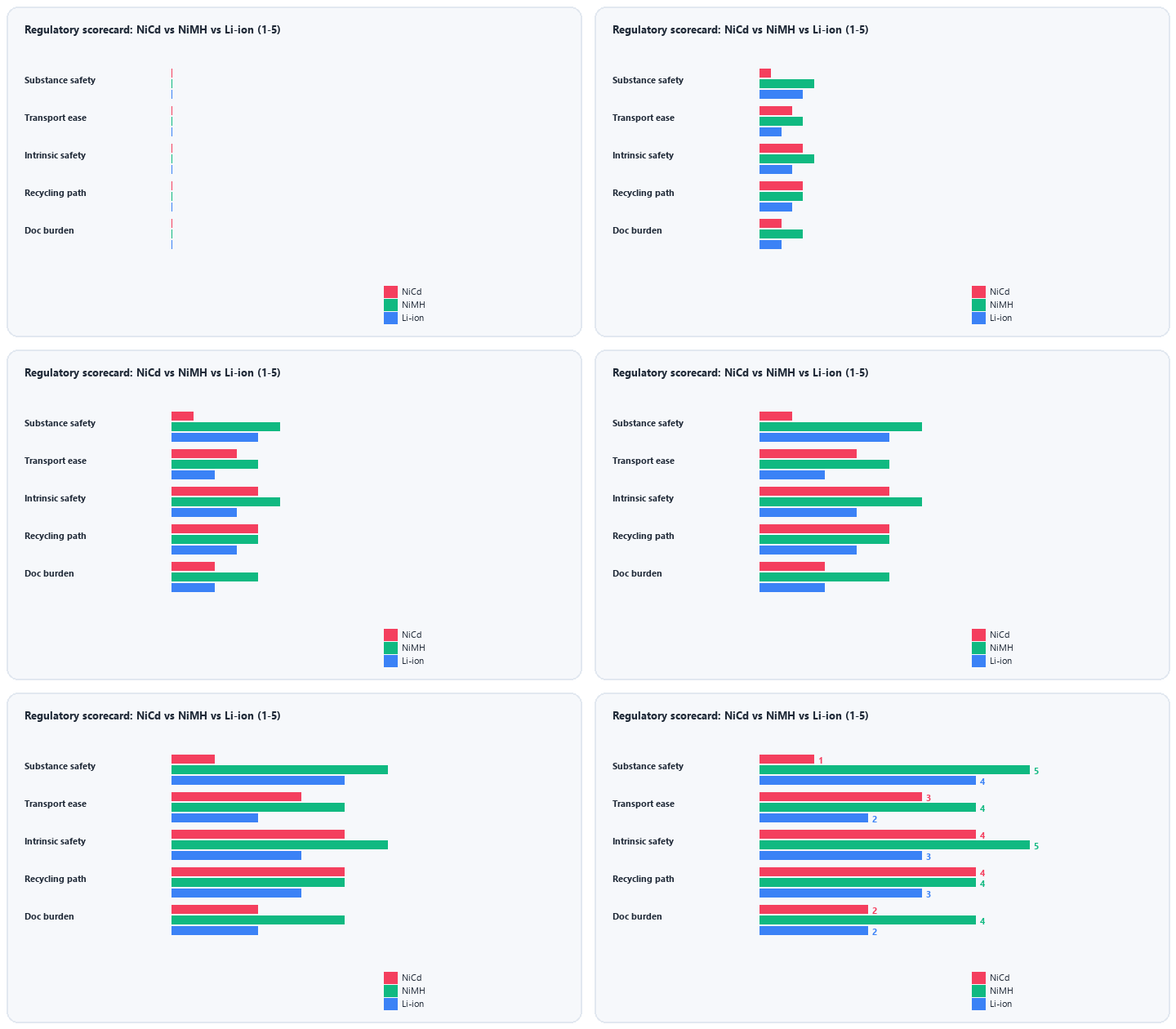
Transport rules diverge sharply. Lithium cells ship under UN 3480/3481 with state-of-charge limits (30 % for many air routes), Wh-based packaging rules, Class 9 labels, testing summaries and increasingly restrictive air-cargo conditions; thermal-runaway incidents drive tightening every year. NiMH ships under UN 3496 (batteries, nickel-metal hydride, Class 9) with substantially lighter conditions and no state-of-charge restriction; its aqueous potassium-hydroxide electrolyte cannot thermally run away or ignite. NiCd shares the aqueous safety profile but is commercially disqualified by cadmium restrictions. For devices where safety near people matters — medical, instruments, public-space equipment — the intrinsic safety of NiMH is a documented engineering argument, not marketing.
End-of-life scoring follows material recovery. Lead-acid leads on mature closed-loop recycling but is heavy and acid-bearing; NiMH offers nickel and steel recovery above 90 % through mature hydrometallurgy, recoverable rare-earth alloys and positive collection value; lithium-ion recycling is scaling but lithium recovery only recently crossed 50 % and processing is costly, with waste-shipment restrictions on black mass tightening. Under Articles 70–72 the 90/95 % Co/Cu/Pb/Ni recovery targets are comfortably met by NiMH infrastructure, and the nickel content feeds Article 8 recycled-content demand — a circular story NiCd cannot tell and lithium is still building.
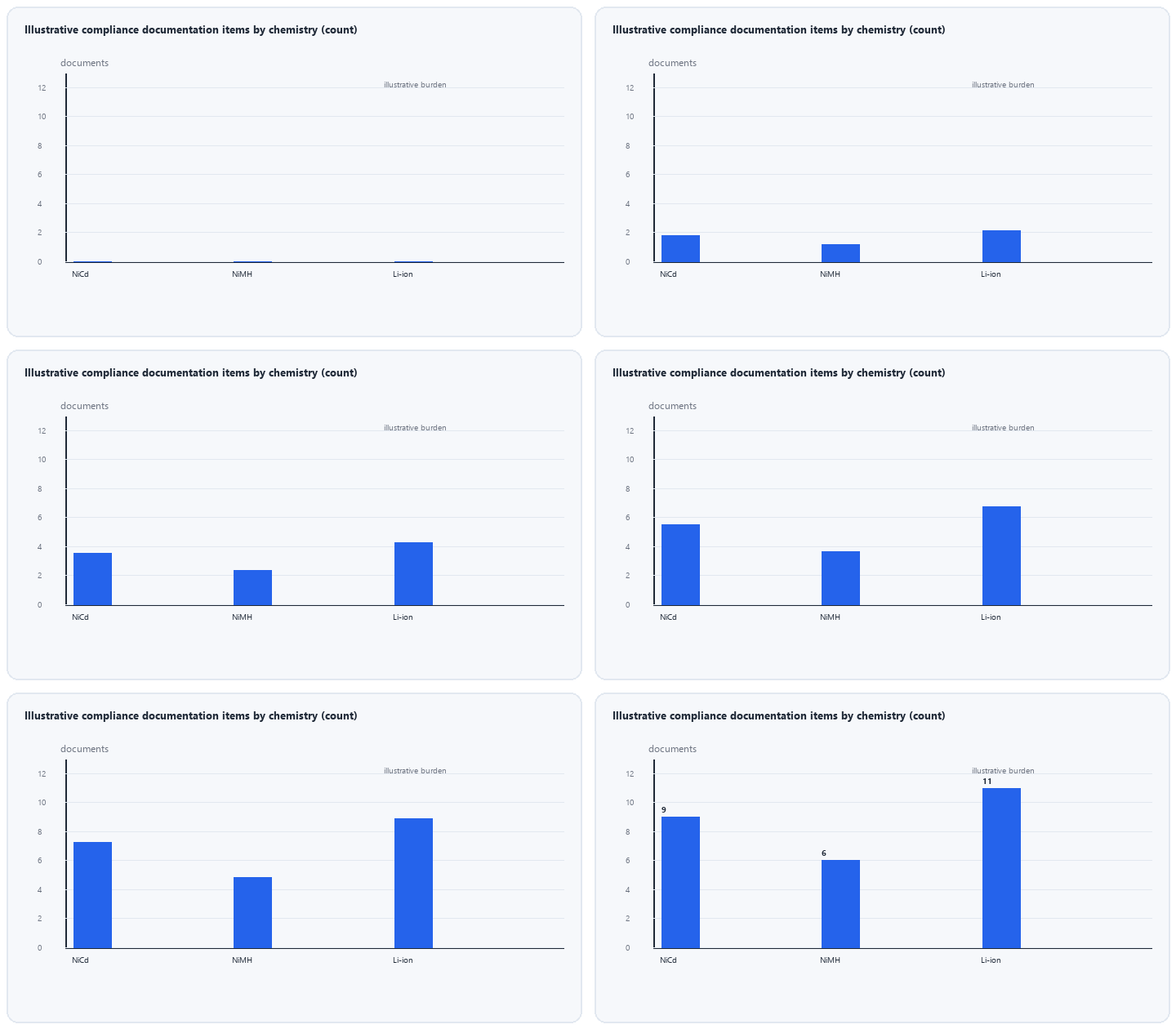
The documentation stack scales with risk. NiCd files must justify shrinking exemptions — a losing maintenance burden. Lithium packs carry the widest stack: UN 3480/3481 evidence, state-of-charge procedures, thermal-safety dossiers, and for larger packs carbon-footprint, recycled-content and passport exposure above the category thresholds. NiMH files are standard and stable: IEC 61951 performance, IEC 62133-1 safety, UN 3496 transport, Annex I/REACH declarations, and portable classification that keeps small cells out of carbon and passport regimes. The illustrative document-count comparison above captures the direction: fewer exception documents, fewer re-audits, fewer surprise obligations when rules tighten.
Choose NiCd only where a legacy specification legally requires it and plan substitution; choose lithium-ion where Wh/kg and high voltage dominate (mobility, high-energy handhelds); choose NiMH where the duty is moderate current, long calendar life, float standby, wide-temperature robustness, intrinsic safety and low regulatory friction — medical instruments, backup and emergency systems, industrial controls, metering, cordless home and personal care, and cost-sensitive professional devices. A 1.2 V NiMH cell is the designed drop-in for legacy NiCd slots, which makes substitution mostly administrative rather than electronic. Run the decision as a written scorecard so the choice is defensible in the technical file.
Weijiang Power manufactures the NiMH side of this scorecard to its full advantage: cadmium-free cells at detection-limit heavy-metal results, IEC 61951/62133-1 and UN 3496 documentation, aqueous intrinsic safety, mature nickel-recycling evidence and portable-category files that keep small packs out of carbon and passport regimes. Send your current chemistry and duty profile and we will return the NiMH cross-reference plus the regulatory comparison for your design-review file.


