An RTU is sold into critical infrastructure, and its back-up power does not escape that scrutiny. The compliance campaign spans four layers at once: protocol conformance so the RTU inter-operates with any standards-based master; substation automation and cybersecurity standards so the data model is correct and the channel is authenticated; environmental and EMC standards so the hardware survives an outdoor cabinet and does not disturb other equipment; and battery performance, safety and transport evidence for the secondary source. This final paper maps that complete campaign for a nickel-metal hydride backed RTU - IEC 60870-5-101 and -104 and DNP3 conformance, IEC 61850 data modelling, IEC 62351-3 transport security, the IEC 61000-6 EMC series and IEC 60068 environmental sequence, and IEC 61951-2, IEC 62133-2 and UN 38.3 for the cells - showing how the battery evidence is woven into the system-level type test and why a supplier that provides complete, lot-traceable NiMH documentation shortens the path to a certifiable, grid-ready product.
Conformance testing proves the RTU speaks the protocol correctly, not merely plausibly. For IEC 60870-5-101 (serial) and -104 over TCP/IP on port 2404, test procedures check object selection, cause-of-transmission coding, clock synchronisation, general interrogation and, crucially for back-up design, event-queue handling and sequence-of-events replay after a link interruption. DNP3 conformance exercises class 0 static data and class 1/2/3 events, buffered-event behaviour, time synchronisation and unsolicited messaging.
Back-up power enters these tests because several conformance cases deliberately interrupt the link and then the supply, requiring the RTU to preserve and correctly replay time-stamped events on recovery - the exact store-and-forward duty the battery is designed for. A pack that drops the rail during a cold modem restart corrupts the replay and fails the case, which is why worst-case battery state and temperature must be among the test conditions rather than an afterthought.
Where the RTU participates in substation automation, IEC 61850 defines the logical nodes, data objects and reporting services - including buffered report control blocks - that keep event history coherent across communication breaks. The standard's modelling discipline makes the data an RTU preserves during back-up operation semantically well defined, so the master can merge buffered and live data without ambiguity.
From a power standpoint, IEC 61850 conformance cases that tear down and re-establish associations must run with the RTU on its secondary source to confirm buffered reports survive and re-synchronise correctly. This ties the autonomy and retention design directly to a recognised interoperability standard, giving the utility customer confidence that the post-outage event record is complete and correctly ordered.
Modern SCADA links are secured under IEC 62351, with IEC 62351-3 specifying transport-layer security - TLS - for TCP/IP profiles such as IEC-104, including certificate handling, mutual authentication and cipher requirements. Establishing and maintaining a TLS session adds cryptographic processing and a slightly heavier handshake than a plaintext connection, which raises both the average load and the energy needed to re-establish a secure session after an outage - a subtle but real back-up-sizing effect.
The security and power designs therefore meet in a testable requirement: after an auxiliary-supply interruption, the RTU must, on battery power, re-establish an authenticated, encrypted association and replay its buffered events within the required time, without the TLS handshake current causing a brown-out. Designing the NiMH pack to cover the cryptographic peak and the reconnection sequence is what allows the security mandate and the data-integrity mandate to be satisfied simultaneously.
An outdoor RTU must meet the industrial EMC environment through the IEC 61000-6 generic standards (immunity for industrial environments and emissions for equipment in that setting), covering electrostatic discharge, radiated and conducted immunity, surge and fast transients on the very supply and signal lines that can carry lightning-induced energy. During the most severe immunity events the RTU - and its back-up source - must continue operating correctly or recover without loss of data or configuration.
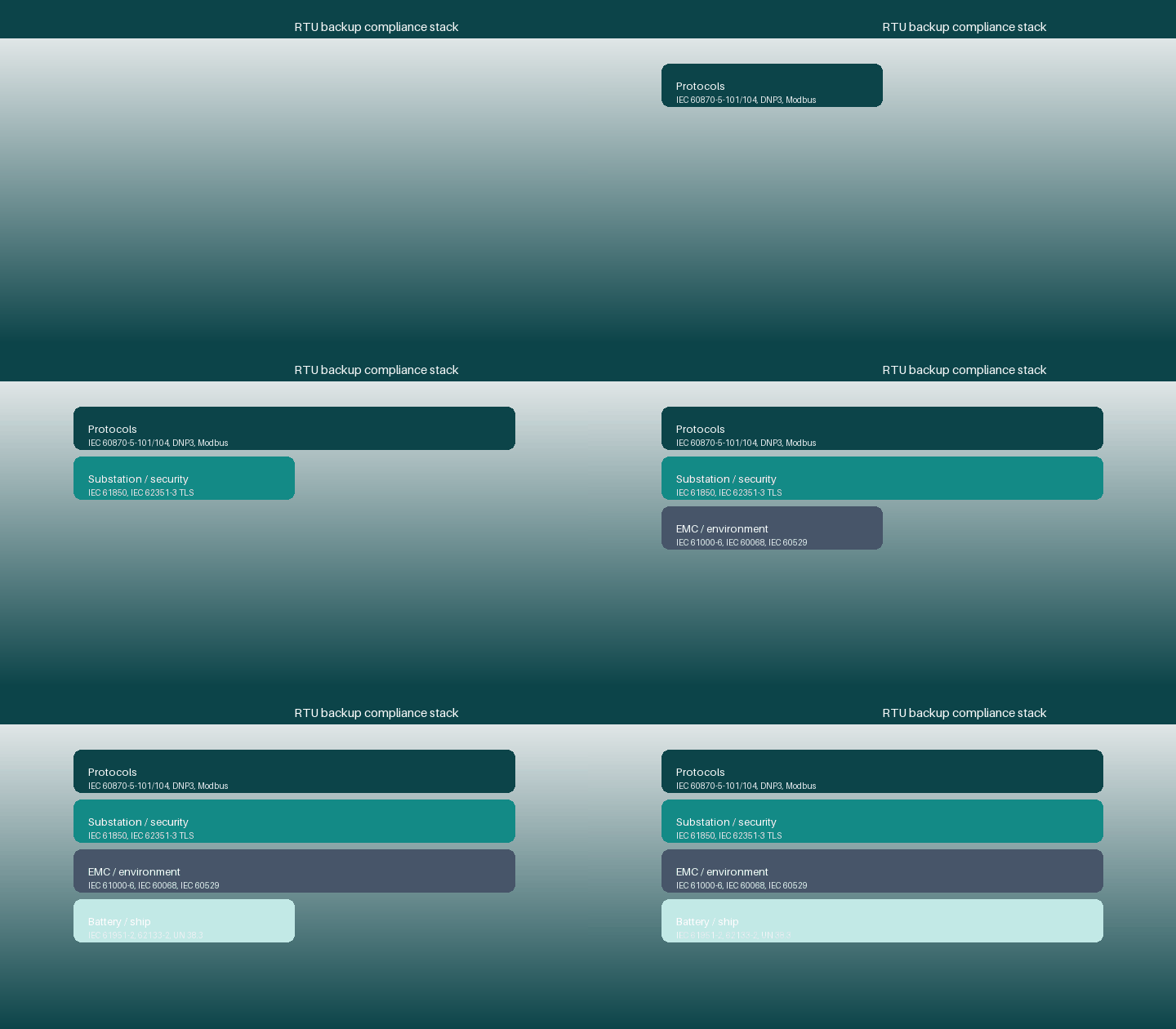
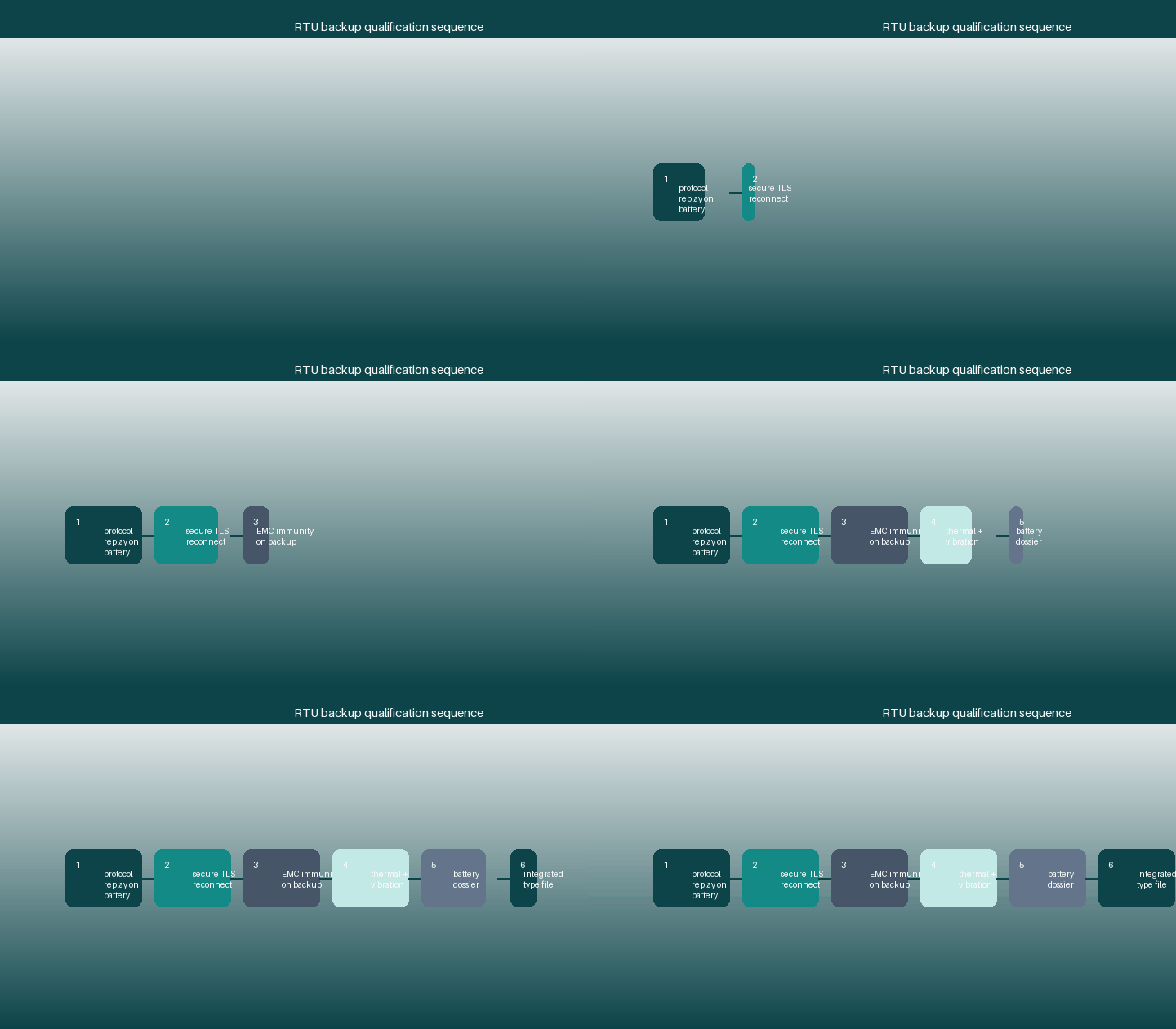
Environmental qualification follows IEC 60068 with cold, dry-heat, damp-heat, vibration and bump sequences representative of pole-mount and cabinet life, and ingress protection under IEC 60529. Critically, these tests are repeated with the RTU running on its NiMH pack at temperature extremes, confirming that the battery's cold-impedance rise and high-temperature behaviour never push the controller out of specification. The first animated figure layers this standards stack; the second sequences the qualification campaign.
The sealed NiMH cells carry their own standardised evidence. IEC 61951-2 defines the performance tests for portable sealed nickel-metal hydride cells and batteries - capacity, charge retention, endurance and internal resistance - which the vendor extends with high-rate discharge, wide-temperature and float-readiness data relevant to RTU duty. IEC 62133-2 provides the safety requirements for sealed secondary cells and batteries under charge, forced discharge, external short circuit, vibration, shock, free fall, thermal abuse, crush and pack-level protection-fault conditions.
UN 38.3 supplies the transport test summary required to ship cells and packs by any mode; because NiMH is not a lithium chemistry, spare battery modules move under simpler transport rules than lithium equivalents, a practical advantage for worldwide delivery to remote utility projects. Together these three documents give the RTU manufacturer a complete, lot-traceable battery dossier to attach to the system technical file.
The final technical file weaves every layer into one coherent package: IEC 60870-5/DNP3 conformance certificates with link-and-supply-interruption cases passed on battery; IEC 61850 modelling and IEC 62351-3 security evidence including secure reconnection on the secondary source; IEC 61000-6 and IEC 60068 results captured at battery worst case; and the IEC 61951-2, IEC 62133-2 and UN 38.3 battery dossier. The through-line is that back-up power is tested as part of the data-acquisition and communication function, never as a disconnected component.
A battery manufacturer that supplies matched, wide-temperature NiMH cells with all three battery-standard documents, internal-resistance and high-rate characterisation, and engineering support for the last-gasp and secure-reconnection tests removes the most variable element from that file. With that backbone in place, the RTU vendor can certify a field controller that preserves the complete, authenticated event record through every disturbance - the foundation on which a utility's fault analysis, protection coordination and regulatory reporting depend.
Weijiang Power designs and manufactures sealed nickel-metal hydride cells and matched industrial packs for remote, off-grid and safety-related equipment, and supports OEM partners with IEC 61951-2 performance files, IEC 62133-2 safety evidence, pulse-load characterisation, wide-temperature testing and charger/pack co-validation. Tell us your duty cycle, peak current, temperature envelope, autonomy target and the standards your product must meet, and our engineers will specify a cell-and-pack combination that protects runtime, reliability and service life. Review the range on the products page.


